How a Digital Preservation Service Protects Your Digital Assets for the Future
Most organisations these days are sitting on more content than they quite know how to handle. Old audiovisual recordings, photographs, born-digital files, research data it accumulates, and a surprising amount of it actually matters, culturally, operationally, sometimes commercially too. The problem is that digital files aren’t as safe as most people assume. Hard drives fail, eventually. Formats fall out of use. Someone deletes the wrong folder without realising. Cyber threats are a genuine, ongoing risk. And poor storage habits have a habit of catching up with you at the worst possible moment.
That’s really the argument for a proper digital preservation service. It’s not the same as just storing files somewhere and hoping for the best. Digital Preservation is about keeping content authentic, usable and accessible not just for the next year or two, but well into the future, decades even.
If you’re managing a media archive, government records, museum collections or corporate content, this isn’t something worth leaving to chance. It’s how you protect what’s taken years, sometimes generations, to build.
What Digital Preservation Actually Means in Practice
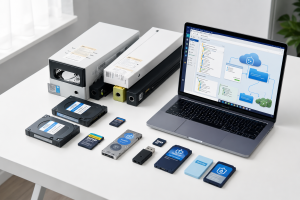
It helps to think of it as an ongoing effort to stay ahead of change. Software moves on. Storage systems get replaced. Hardware eventually stops being supported. Digital preservation is the mix of strategies and workflows that keep files usable through all of that.
Worth separating this from a standard backup, since the two get mixed up fairly often. A backup is a snapshot, useful, but static. Preservation takes more of a long view, keeping material readable, complete and genuine even as everything around it shifts. If done properly, decent digital preservation services cover the whole lifecycle digitisation, metadata creation, appropriate storage, ongoing monitoring, migration when formats age out, and reliable access when it’s actually needed.
Why “It’s Backed Up Somewhere” Isn’t Really Good Enough
A lot of organisations assume an external hard drive, or a folder tucked away in the cloud, is basically the same thing as preservation. It isn’t. Storage on its own doesn’t offer much real protection.
Here’s what tends to work against digital files over time, usually without anyone noticing until it becomes a problem:
Storage devices failing—not if, but when
Quiet file corruption that can go undetected for years
File formats and playback systems becoming obsolete
Plain human error, the wrong folder deleted at the wrong time
Ransomware and other cyber threats
Inconsistent or messy file organisation
Metadata going missing, which strips files of the context that made them useful in the first place
Skip the structured approach and you’re risking historical records, research, intellectual property, media collections—gone for good. A proper digital preservation service exists to catch these issues early, before they turn into something permanent.
How This Actually Protects What You’ve Got
Files get captured and preserved properly, right from the start
This means capturing and preserving digital files as archival-quality masters, not compressed copies filed away without much thought. Preservation specialists keep the original metadata and technical detail intact, so files can be reused or migrated later on without losing quality.
Data integrity gets checked, not just assumed
Corruption rarely announces itself. Files can quietly degrade, sometimes for years, before anyone twigs there’s an issue. That’s why checksum verification and regular integrity checks matter so much they flag problems while there’s still time to fix them. And when records are needed for legal, historical or operational reasons, it’s that kind of data integrity that makes them trustworthy in the first place.
Metadata stays attached to the files, not filed away separately
A file without context isn’t worth a great deal. Creation dates, creator details, technical specs, rights information, collection notes, keywords—all of it needs to travel with the file. Otherwise you end up with a pile of content nobody can properly identify a few years down the track.
Archive management is about more than tidy folders
Good Archive management means files can actually be found when someone needs them, large collections stay manageable instead of chaotic, naming conventions hold up over time, access is properly controlled, and version history doesn’t just vanish. It also makes future migration projects a lot less painful.
Obsolescence gets dealt with before it becomes urgent
Tapes, optical discs, ageing hard drives—plenty of organisations are still holding onto formats that are either already hard to access or well on their way there. Preservation specialists keep an eye on this and shift content across to current formats ahead of time, rather than scrambling once access has already been lost.
Redundancy isn’t treated as optional
One copy is never enough—that’s close to rule one in preservation. Multiple preservation masters, redundant storage locations, off-site backups, disaster recovery planning, secure repositories. Layer it up so no single point of failure can wipe out something irreplaceable.
None of it matters much if the content can’t actually be used
The whole point of preservation is future access. Preserved collections end up supporting research, documentaries, broadcasting, community projects, exhibitions, corporate knowledge management, storytelling, and plenty more besides. Preservation without accessibility is, in practice, just an expensive way to store files.
Who Tends to Need This?
Museums, libraries, broadcasters, government agencies, universities, cultural heritage organisations, corporate archives, historical societies—the list is broad, but the common thread is a collection that genuinely matters. If losing it would actually hurt, this applies to you.
Why Bring In Specialists Rather Than Handling It In-House
Internal IT teams generally do a solid job with day-to-day backups and storage. But digital preservation is its own discipline, drawing on archival standards, media formats, metadata systems and long-term accessibility planning. It’s a different skill set entirely, and not a small one.
Professional digital preservation services manage this end to end: helping organisations capture and preserve digital files to archival standards, verifying data integrity on an ongoing basis, building genuine Archive management systems, staying ahead of technological obsolescence, and setting collections up for future access and reuse. Done properly, a collection stays both protected and genuinely usable, not just technically “saved somewhere” and forgotten about.
Better to Plan for This Than React to It Later
Digital content keeps growing, in volume and in importance, and that trend shows no sign of slowing. Without a proper preservation plan in place, valuable material tends to disappear quietly, and usually for good.
DAMsmart works with organisations across Australia to preserve and manage audiovisual and born-digital collections, covering digitisation, preservation workflows, archive management and secure access. If your organisation’s Digital Preservation strategy needs some attention, DAMsmart’s team can help build something that actually stands up over the long term.